
There are gemstones that remind you of the ocean, and then there’s Larimar.
With its dreamy shades of Caribbean blue, soft white patterns and natural variations from stone to stone, Larimar can look remarkably like sunlight moving across tropical water. It’s one of the reasons I’ve always felt it belongs so naturally at Crabby Mermaid. If you love the sea, it’s hard not to be drawn to it.
But Larimar is more than a beautiful blue stone. Its story begins in one very specific corner of the Caribbean, and that story is every bit as interesting as the stone itself.
What Is Larimar?
Larimar is a rare blue variety of a mineral called pectolite, and there’s something pretty incredible about where it comes from. The Larimar we know and love is found in just one part of the world — the Dominican Republic, on the Barahona Peninsula.
Its story begins deep within the area’s volcanic rock, where mineral-rich fluids helped form the stone over time. That volcanic connection is real, but Larimar isn’t actually hardened lava, as you’ll sometimes read online. What nature created instead is a stone with colors and patterns that can look remarkably like the Caribbean Sea. When I look closely at Larimar, I see more than the surface of the water. The blues and swirling whites remind me of diving in the Caribbean — looking into that beautiful underwater world and feeling the quiet and serenity that only the ocean seems to bring. That’s a big part of what drew me to Larimar in the first place.
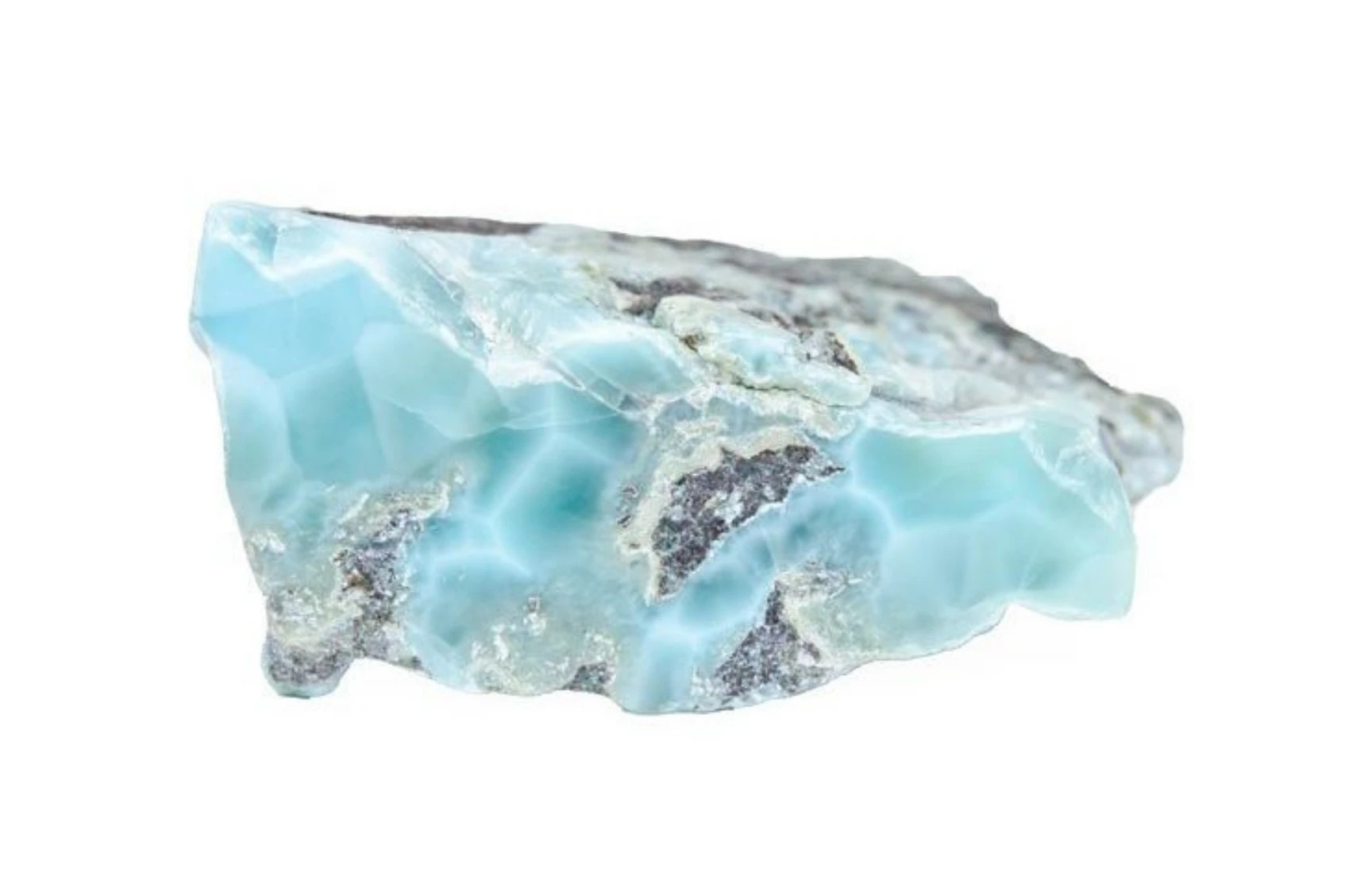
Seeing Larimar in its natural state makes the finished gemstone even more interesting. What begins as rough material can eventually reveal those beautiful blues and distinctive patterns after it is cut and polished.
Why Does Larimar Look Like the Caribbean Sea?
This is where Larimar really gets me. No two natural stones look exactly alike, and sometimes you can look at one and swear you’re looking down into clear Caribbean water.
Larimar can range from softer blue and greenish-blue shades to more vivid blues, often mixed with beautiful white patterns. Some stones look cloudy and peaceful; others have striking streaks and markings that resemble sunlight dancing across the water.
There’s science behind that gorgeous blue, too. Gemological research has linked Larimar’s blue coloring to small amounts of copper within the stone. But you certainly don’t need to know the chemistry to understand its appeal — one look at a beautiful piece of Larimar usually does that.
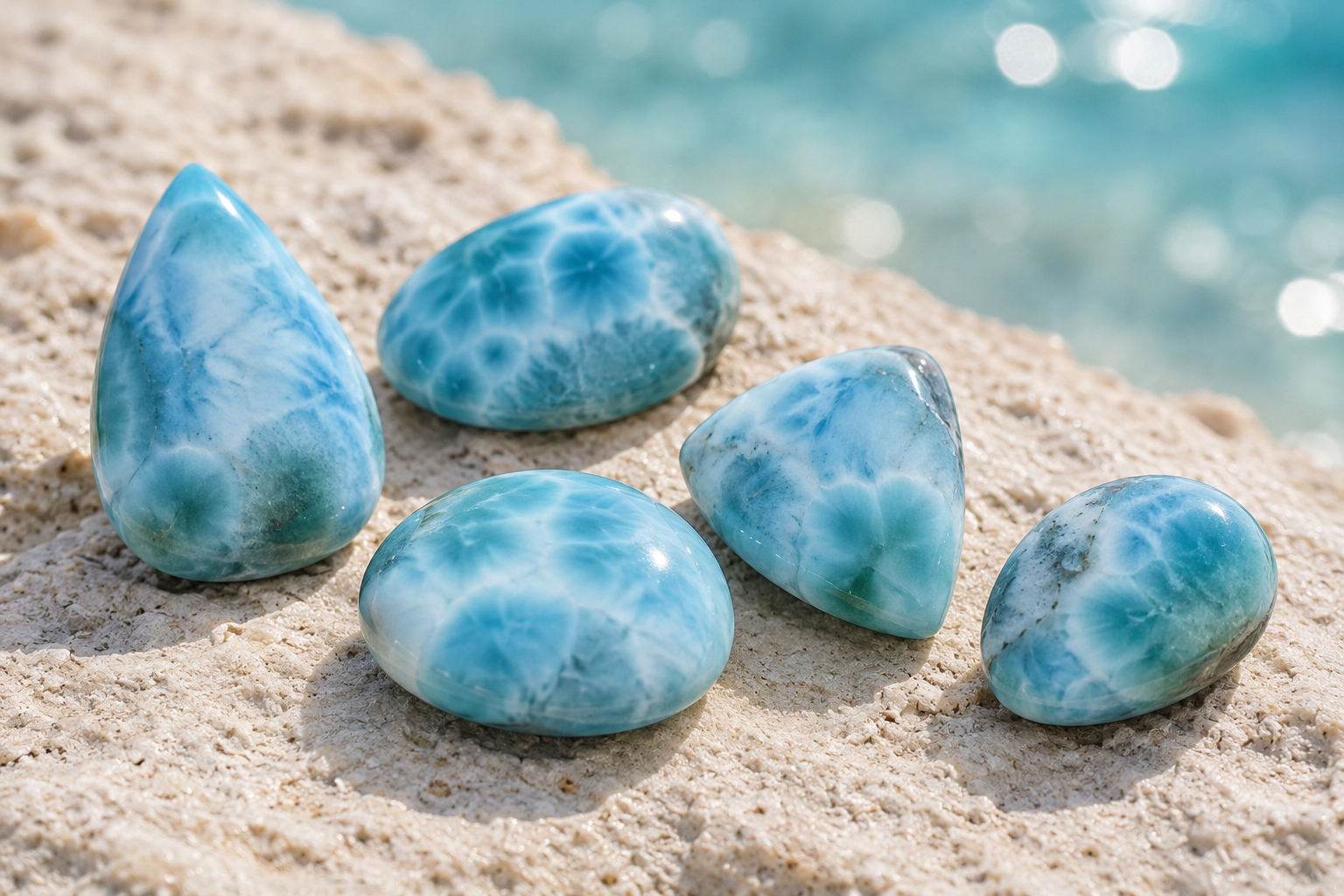
That natural variation is one of my favorite things about Larimar. You’re not looking at a perfectly uniform color or pattern — every stone has its own character. One may remind you of shallow turquoise water, while another looks like waves, clouds or sunlight moving beneath the surface. It’s one of the things I love most when selecting Larimar for Crabby Mermaid — every stone brings a slightly different piece of the Caribbean with it.
The Story Behind the Name Larimar
The story behind Larimar’s name is almost as beautiful as the stone itself.
Although Larimar is often said to have been “discovered” in 1974, its documented history actually goes back further. Records in the Dominican Republic trace knowledge of the stone to 1916, when Father Miguel Domingo Fuertes reported finding a blue-green stone along the Bahoruco River. Then, in 1974, Miguel Méndez collected samples of the stone, helping bring what we now know as Larimar to wider attention.
Méndez gave the stone its beautiful name by combining “Lari,” from his daughter Larissa’s name, with “mar,” the Spanish word for sea. I can’t think of a more fitting name for a stone that so naturally captures the colors of the Caribbean.
Larimar has since become an important part of the Dominican Republic’s identity and culture. It was officially declared the country’s national stone, and November 22 is recognized as National Larimar Day — a celebration of a gemstone found nowhere else quite like this.
From Caribbean Stone to Larimar Jewelry
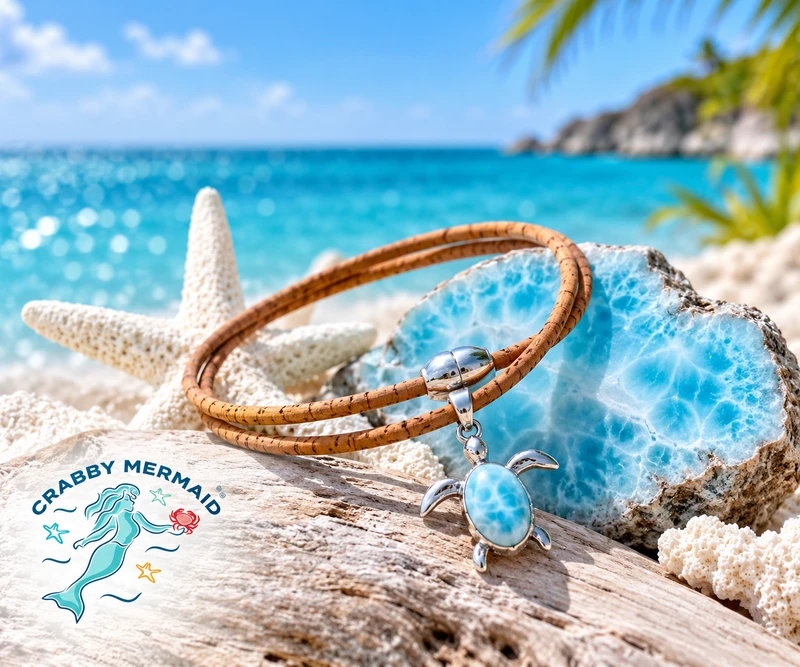
Once Larimar is cut and polished, it becomes a beautiful way to bring that Caribbean connection into something you can actually wear. Set into jewelry, the stone becomes more than something beautiful to admire — it becomes a reminder of the water, the places we’ve been, and the places we still dream of going.
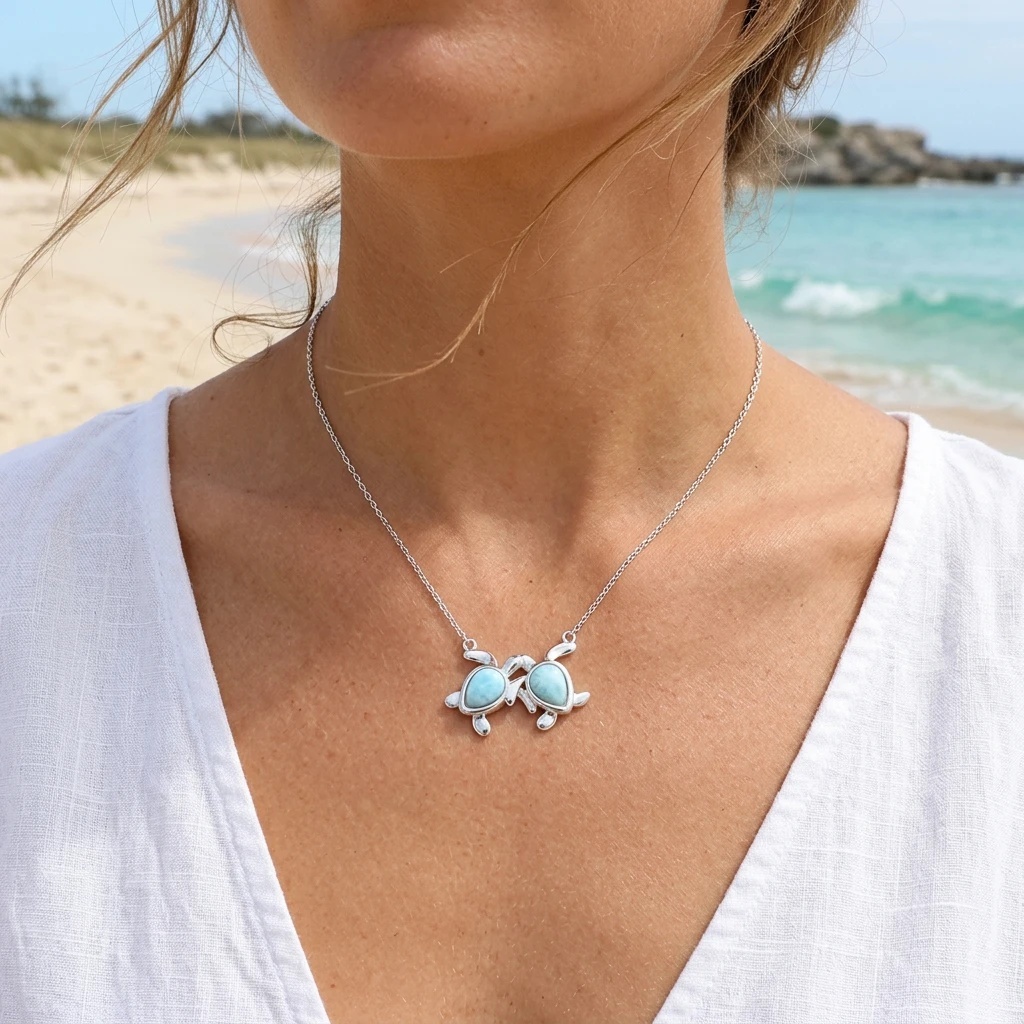
Larimar has a way of making jewelry feel connected to the water before you ever get near the beach. I love how the blue stands out against sterling silver, but still feels soft and natural rather than overly bright. It’s an easy way to carry a little reminder of the sea with you wherever the day takes you. To help keep your Larimar looking its best, visit our Jewelry Care Guide for care and cleaning tips.
A Little Piece of the Caribbean
Maybe Larimar reminds you of a beach you already love, a favorite island, or a trip you never wanted to end. Or maybe it simply brings back that feeling of seeing clear blue water stretching out in front of you and knowing, for just a moment, there’s nowhere else you’d rather be.
That’s what Larimar has always meant to me. Its story and geology are fascinating, but the connection I feel to it is much simpler. It reminds me of why I fell in love with the ocean in the first place — the beauty, the calm, the adventure, and all those memories made near the water.
And maybe that’s the real beauty of Larimar. A little piece of the Caribbean that lets you carry the ocean with you.
If Larimar speaks to you the way it does to me, you can explore the Larimar Jewelry Collection at Crabby Mermaid and find the piece that brings a little bit of that Caribbean blue into your own story.